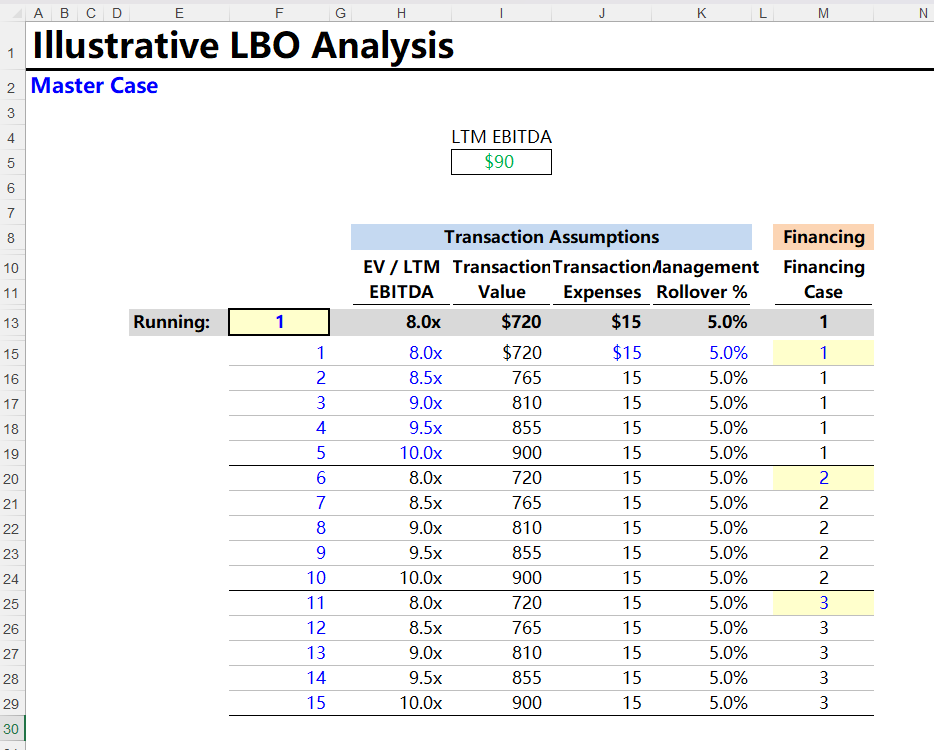
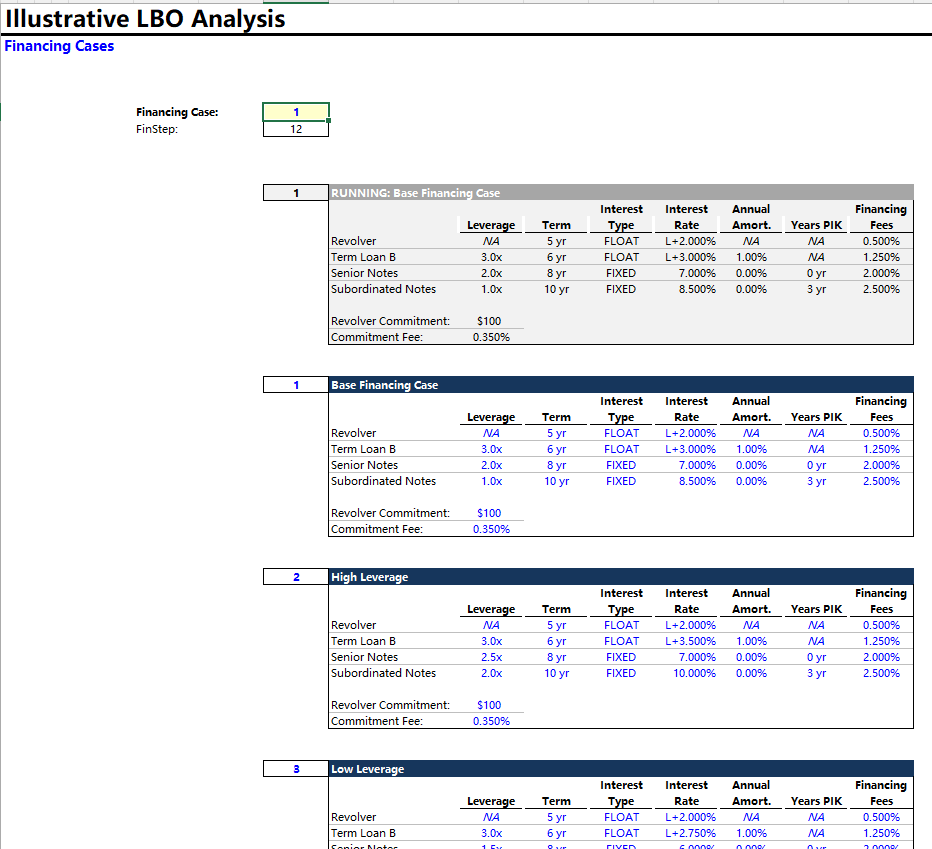
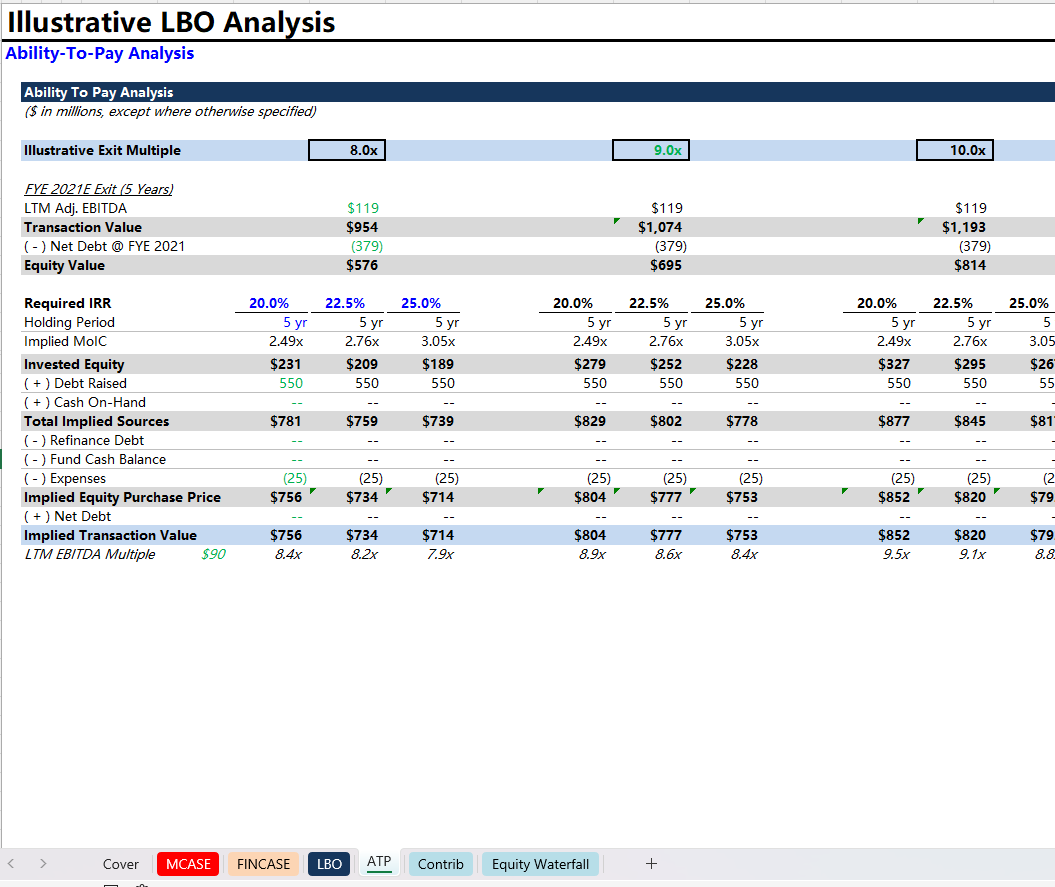
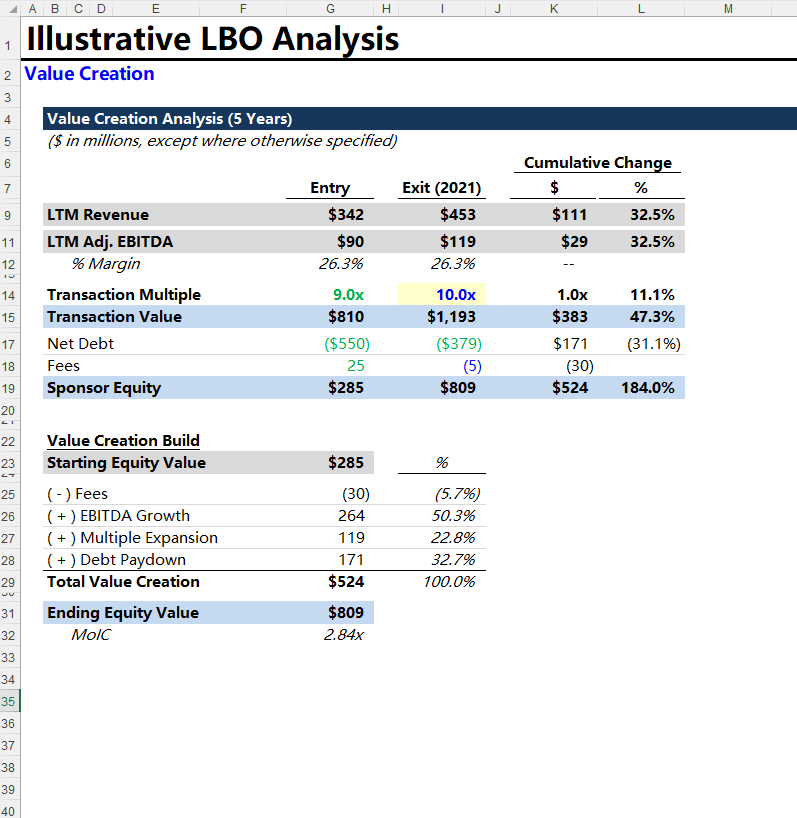
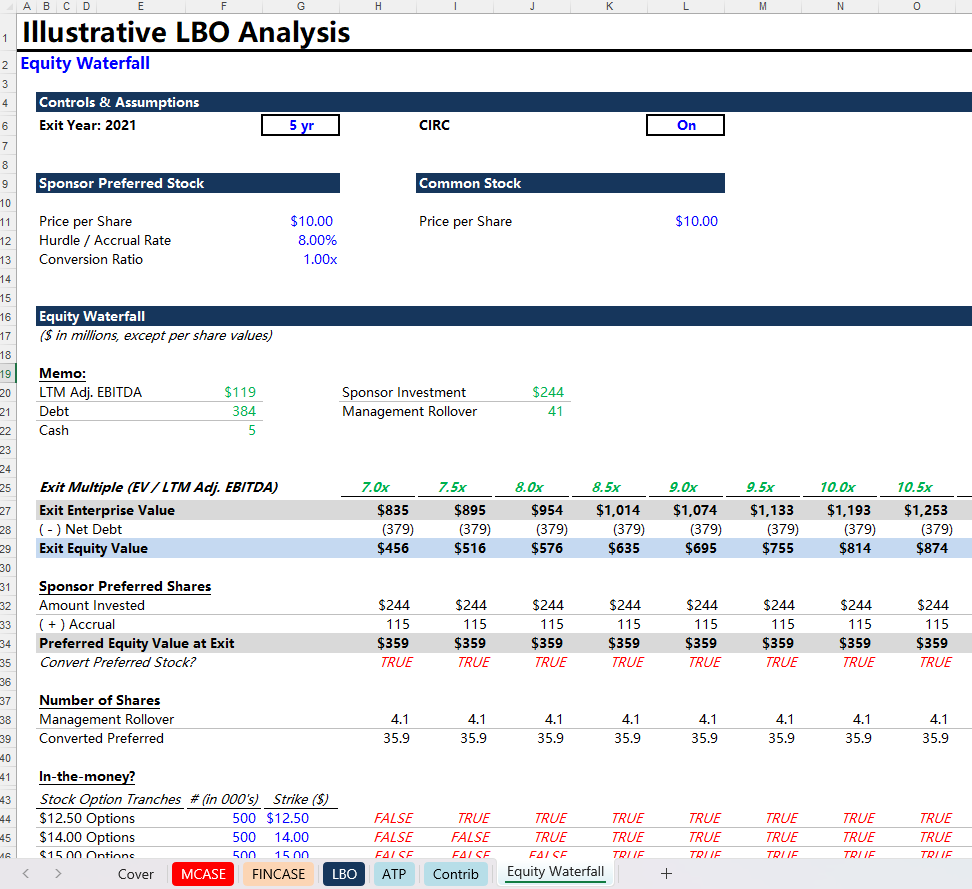
LBO Case Study_ Advanced LBO (手册+Excel 模型) 2026-06-05 财务模型 · 高级专属 579 模型介绍我们将向你展示如何将我们的中级LBO模板转化为一个更高级、更灵活的LBO模型。内容涵盖较多,因此我们将把本教程拆分为一系列文章。本篇将演示如何整合情景分析、灵活的融资假设以及敏感性分析。后续文章将涵盖运营模型和附加收购等主题。目标在本教程结束时,您将学会如何构建一个精细且灵活的LBO模型。关键点请下载该模板,然后我们一起来看一下。您会注意到,该模型包含以下四个工作表标签:ATP – 这是我们的偿付能力分析(ability-to-pay analysis)Contrib – 这是我们的基础价值创造分析(value creation analysis)LBO – 这是我们的中级LBO模型Equity Waterfall – 这是一个示意性的股权瀑布(equity waterfall)在这些标签中,我们几乎将全部精力集中在 LBO 工作表上。其余三个标签属于辅助分析,但我们之所以在此一并提供,原因如下:ATP – 我在任何 LBO 模型中都会附带一份偿付能力分析。该分析易于添加,并且是检验 LBO 结果是否合理的绝佳工具。Contrib – 同样,我始终会包含一个价值创造归因分析。了解驱动模型回报的因素至关重要。Equity Waterfall – 这在投行业务中并不常用,但在任何严肃的私募股权交易中都会出现。请下载手册以获取更多信息…… 资源下载高级会员 免费下载 折后0元下载价格500 元高级会员免费立即购买普通购买下载价格500 元立即购买下载咨询请添加顾问微信:majojor-advisor 原文链接:https://majojor.com/financialmodel/lbo-case-study_-advanced-lbo/,转载请注明出处~~~ 0 1



评论0